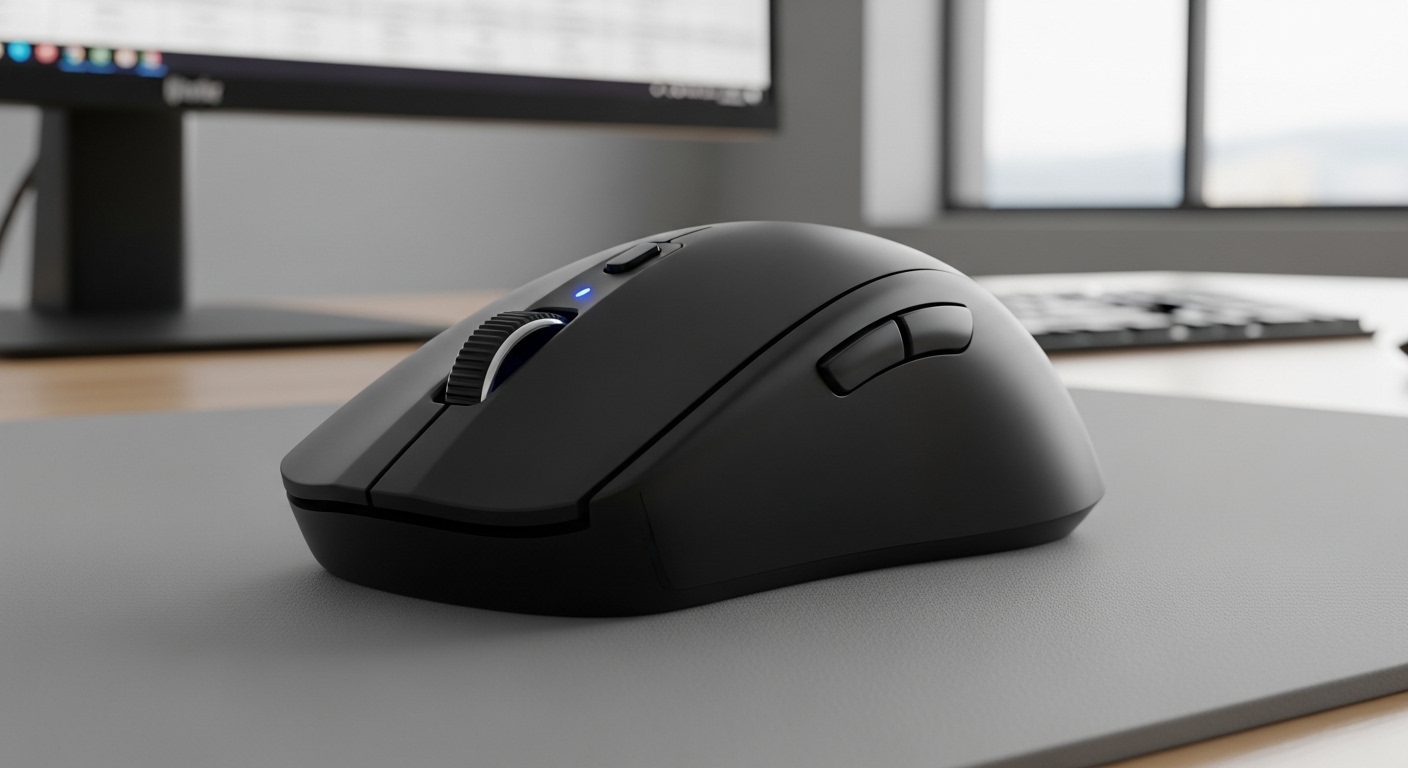
If you work in a quiet office (or share a room with someone on calls), a loud mouse can get annoying fast. The right quiet-click mouse keeps things peaceful—without turning every click into a soft, mushy press.
Here are standout quiet options that stay comfortable for long workdays and feel dependable in daily use.
Disclosure: Some links may be affiliate links. As an Amazon Associate I earn from qualifying purchases.
Introduction
Quiet-click mice are a small upgrade that makes a big difference—especially if you write, edit, code, or handle emails all day. The goal isn’t “no sound at all.” It’s lower noise with reliable feedback, so you don’t misclick and you don’t feel like you’re pressing a sponge.
In this roundup, I’m prioritizing:
- Low click noise (left/right buttons + scroll behavior)
- Button feel (clear actuation, not vague)
- Comfort over hours (shape, weight, hand fatigue)
- Connection stability (Bluetooth vs USB receiver vs wired)
- Battery convenience (long life or easy charging)
Standout features to look for
- Silent switches with defined feedback: Quiet doesn’t have to mean mushy.
- Stable connection: USB receiver is often the most “set-it-and-forget-it.”
- Comfort-first shape: A shape that supports your palm reduces finger tension.
- Practical scrolling: A noisy scroll wheel can defeat the purpose of silent clicks.
- Battery you can ignore: Either long-lasting AA/AAA or a recharge system you won’t forget.
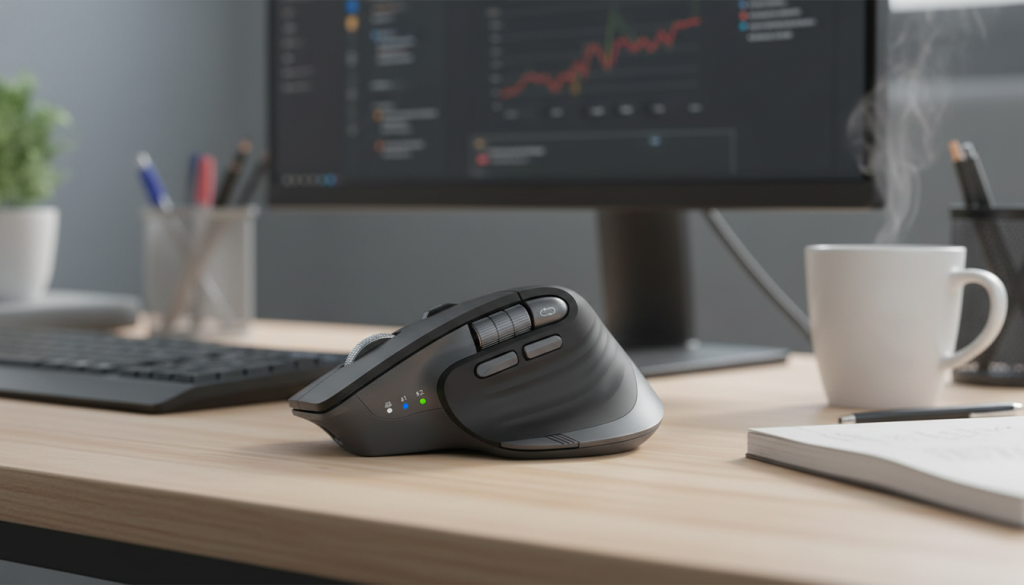
1) Ergonomic Rechargeable Bluetooth Silent Mouse (Multi-Device)
Description
This is a quiet-click mouse built for people who jump between devices and want more comfort than a basic office mouse. The larger ergonomic shell supports your palm, which helps if you’re doing long stretches of email, docs, and spreadsheets.
Real-user feel
The biggest “everyday” advantage is convenience—multi-device support can reduce desk clutter and make switching setups painless. Clicks are kept quiet, and the shape feels more relaxing than slim travel mice.
Pros
- Quiet-click experience that works well in shared spaces
- Ergonomic shape supports the palm for longer sessions
- Multi-device convenience is a real quality-of-life upgrade
- Rechargeable (no frequent battery swaps)
Cons
- Bulkier than a standard mouse (not ideal for small hands)
- Extra features can be overkill if you only need basic clicking
- Some ergonomic mice feel better on a mouse pad than bare desk
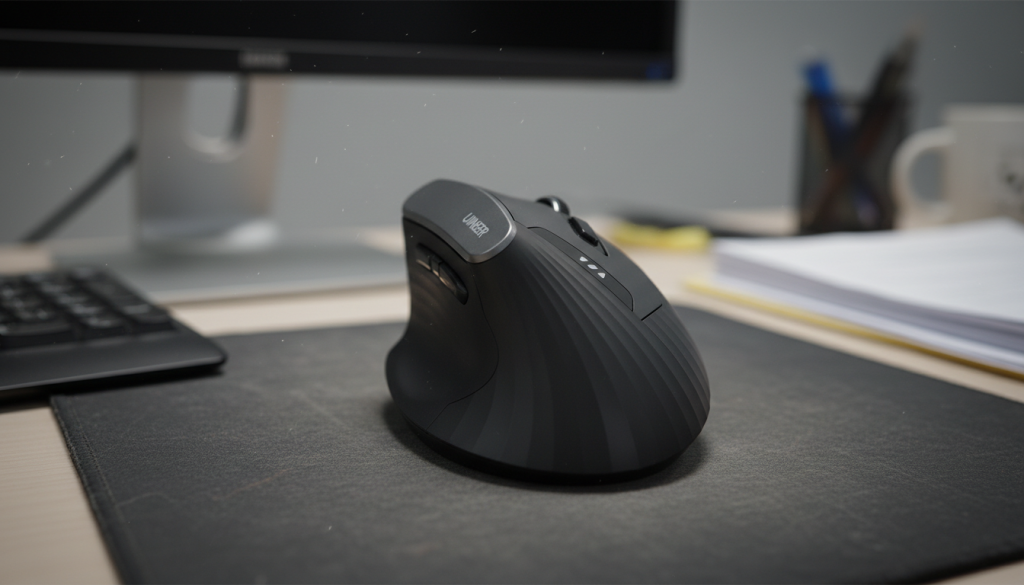
2) Uineer Bluetooth Vertical Ergonomic Mouse (BT + 2.4G, Rechargeable)
Description
If wrist comfort is the priority, a vertical mouse can help by keeping your forearm in a more natural position. This model combines a vertical grip with quiet-click behavior and flexible connectivity (Bluetooth + USB receiver).
Real-user feel
Vertical mice usually take a few days to get used to. Day one can feel awkward, but once your hand adapts, many people find they can work longer with less wrist tension.
Pros
- Vertical posture can reduce wrist twist for many users
- Quiet clicks are office-friendly
- Flexible connections (Bluetooth + receiver)
- Rechargeable and easy to keep running
Cons
- There’s a learning curve (expect 2–5 days)
- Not everyone likes vertical shapes for precise, fast cursor work
- If you have very small hands, the grip can feel large
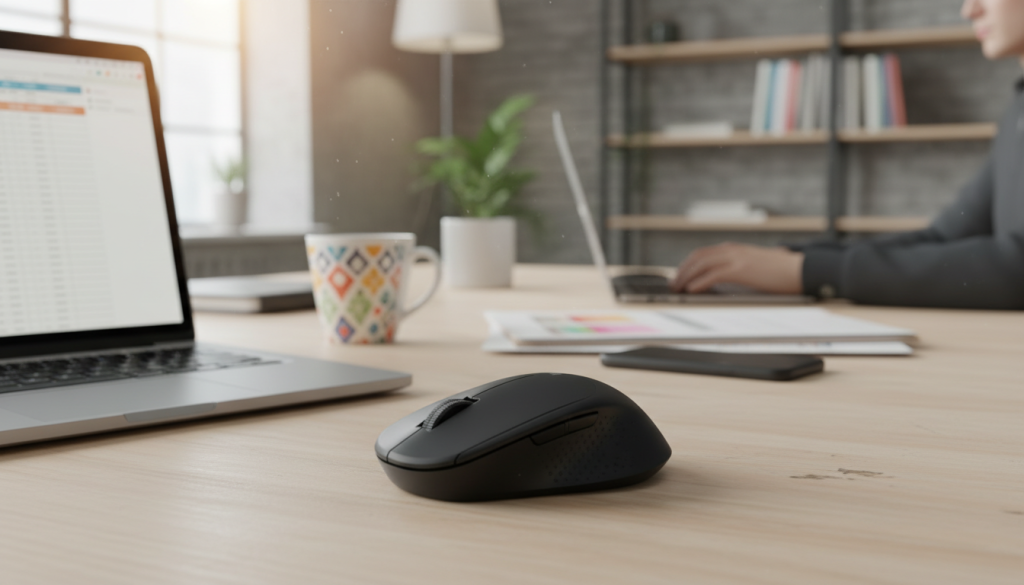
3) Logitech M330 Silent Wireless Mouse (USB Receiver)
Description
This is the “safe pick” for most people: quiet clicks, reliable performance, and a simple shape that works for general office tasks. It’s lightweight and doesn’t demand any setup beyond plugging in the USB receiver.
Real-user feel
The click is noticeably quieter than typical mice, but it still feels deliberate—so it’s less likely to cause accidental clicks or that vague “did it register?” feeling.
Pros
- Excellent balance of quiet + click feedback
- Stable USB receiver connection (low hassle)
- Lightweight and comfortable for long office sessions
- Great for shared spaces and calls
Cons
- Not a vertical ergonomic shape (less wrist-angle correction)
- If you want true multi-device switching, you’ll want another model
- More “everyday office” than “power user”
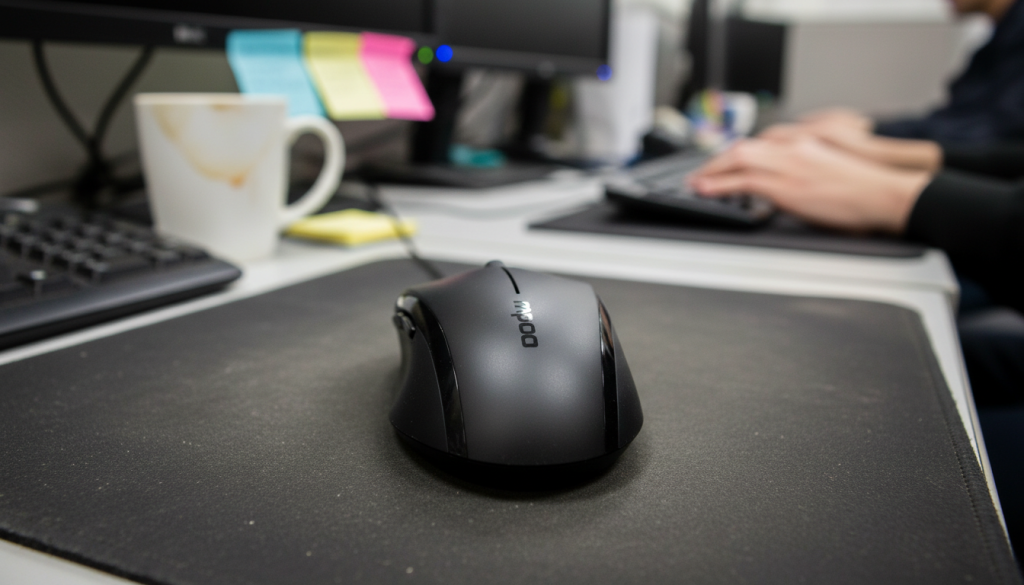
4) Rapoo Silent Wired Mouse (Simple, Plug-and-Play)
Description
Wired isn’t trendy, but it’s hard to beat for simplicity. If you want quiet clicks with zero pairing and zero battery management, a silent wired mouse is a straightforward win.
Real-user feel
This is the type of mouse you keep at the office or plug into a desktop and never think about again. Great for basic productivity work where reliability matters more than features.
Pros
- No batteries, no pairing—just plug in and work
- Quiet clicking for shared spaces
- Simple and dependable as a daily office tool
- Nice as a backup mouse to keep in a drawer
Cons
- Cable may be annoying for cleaner desk setups
- Fewer features (no switching, fewer adjustments)
- Better for stationary desktops than travel
Comparison: which one makes the most sense?
Here’s the simplest way to choose:
- Most people / best overall balance: Logitech M330 Silent Wireless
Quiet clicks + consistent button feel + stable connection. It’s the easy recommendation. - Switch devices often (laptop + tablet / multiple computers): Multi-Device Rechargeable Bluetooth Silent Mouse
Convenience wins if you change devices regularly. - Wrist discomfort / want a more “ergonomic posture”: Uineer Vertical Ergonomic Mouse
Best if you’re specifically trying to reduce wrist twisting. - No battery, no pairing, no fuss: Rapoo Silent Wired Mouse
Ideal for a fixed desk setup.
My honest pick (optimal choice)
If you want the best mix of quiet clicks, non-mushy button feel, and day-to-day reliability, I’d choose the Logitech M330 Silent Wireless Mouse. It hits the core promise of a quiet office mouse without tradeoffs that show up after a week of use.
Quick tips to avoid “mushy” regret
- Quiet doesn’t mean zero feedback. Look for defined actuation so you don’t misclick.
- Don’t ignore the scroll wheel. A noisy scroll can be more annoying than clicks.
- Receiver vs Bluetooth: USB receiver usually has fewer random hiccups in busy office environments.
- Give ergonomic shapes a few days. Your hand needs a short adjustment period.